Completed named John Winston Lennon (born in Liverpool, England, October 9, 1940 - died in New York City, United States, December 8, 1980 at age 40 years) is best known as a singer, songwriter, instrumentalist, writer and political activist known throughout the world as the leader of the Beatles. Lennon and Paul McCartney formed a partnership songwriter's most successful and managed to date. Lennon to McCartney complement each other very well.
John began his career with The Beatles in 1960. Together this group that released several albums in between, Please Please Me (1963), With the Beatles (1963), A Hard Day's Night (1964), Beatles for Sale (1964), Help! (1965), Rubber Soul (1965), Revolver (1966), Sgt. Pepper's Lonely Hearts Club Band (1967), The Beatles (1968), Yellow Submarine (1969), Abbey Road (1969) and Let It Be (1970).
During 1970 to 1975, John lived solo career, with albums released in between, John Lennon / Plastic Ono Band (1970), Imagine (1971), Some Time in New York City (with Yoko Ono in 1972), Mind Games ( 1973), Walls and Bridges (1974), Rock 'n' Roll (1975), Double Fantasy (with Yoko Ono 1980), Milk and Honey (with Yoko Ono 1984), and others.
After the dissolution of the Beatles in 1970, he was also successful with his solo career. Hitsnya one that until now still very popular is the "Imagine", a song which later became one of the world peace hymn.
Lennon also showed its rebellious and cynical humor in movies like A Hard Day's Night (1964), in a book he wrote as In His Own Write, press conferences and interviews. He uses his popularity to its activities as a peace activist, artist and writer. Lennon married twice, namely by Cynthia Powell in 1962 and the Japanese artist, Yoko Ono in 1969. He has two children, Julian Lennon (born in 1963) and Sean Taro Ono Lennon (born 1975). He died in New York at the age of 40 years, was shot by Mark Chapman, the crazy fans.
John Lennon, is one of the singer and actor is also the world. Famous as a member and founder of music group The Beatles, with Paul McCartney, George Harrison and Ringo Starr.
Stevie Wonder has the original name was born Steveland Hardaway Judkins in Saginaw, Michigan, USA, May 13, 1950. Stevie, known as a singer, songwriter, record producer and social activist.
The singer is also known by the name of Steveland Morris has been recorded and sung more than 10 Top 30 hits, won 21 Grammy Awards and has received a Grammy Lifetime Achievement Award. In addition, he also ever won an Oscar for Best Song category, by I Just Called to Say I Love You from the album The Woman in Red.
According to the story, she was born prematurely in Saginaw, Michigan, probably because too much oxygen in an incubator, caused him to suffer blindness since a toddler.
His mother, Lula Mae Hardaway educated with the principles of independence, though she suffered blindness, but the brothers still treat him like a normal human being. Hardaway, who is also a composer taught musical ability from an early age.
Related to his private life, she was married with Syreeta Wright, a singer Wonderlove band members, who diririkannya. Next socialist party activists was married Kai Millard Morris, a model and designer. From the marriage they were blessed, Mandla Kadjaly Carl Stevland Keita Morris and Morris, and daughter Aisha Morris.
Eric Clapton was born in Surrey, England, March 30, 1945. Eric Clapton was already destined to become a musician because since the age of four he was able to play the guitar even though only a toy guitar owned by his cousin. Since then, interest only fixed Eric Clapton on guitar and guitar. Not surprisingly, at the age of 14 years, Eric Clapton being a guitarist is quite popular in the UK. For additional references that may be many who do not know, Eric Clapton was once a dispute with George Harison, guitarist The Beatles, because the seizure of a girl named Patty Boyd, who was none other than the wife of George Harrison. The story, at that time Patty Boyd was 26 years old and was known as a model. Because felt is only used as a puppet The Beatles and locked up in a mansion Patty George Harrison finally determined to have an affair with Eric Clapton. That's when love triangle explodes. George Harrison does not accept the situation, Patty finally recaptured from the hands of Eric Clapton and guitarist cursed with a very hurtful words. Confusion, shame and guilt that so much makes Eric Clapton is very miserable. Moreover, Eric was really - really love Patty. Then he poured out his grief in a song called Layla.
Enrique Iglesias has a long name Enrique Miguel Iglesias Preysler, born in Madrid, Spain, May 8, 1975. He is known as a Spanish singer who ever won a Grammy Award and Latin Grammy Awards.
Enrique is the son of popular singer Julio Iglesias and Isabel Preysler journalist, who lives in Miami, Florida, USA in 1983, since I was eight years old.
Enrique albums in between, Enrique Iglesias (1995), vivir (1997), Cosas del Amor (1998), Enrique (1999), Escape (2001), Quizas (2002) and Seven (7) (2003). Where six of his albums achieved multi-platinum.
In addition to these albums, the man who had supported the film Once Upon a Time in Mexico with Antonio Banderas, Salma Hayek and Johnny Depp, also undergo his career as a solo singer.
While relating her personal life, this handsome men ever having a romance with star Jennifer Love Hewitt and tennis player Anna Kournikova.
Air Supply a legendary group from Australia is known as the theme songs of love that was so familiar in the ears of music lovers.
Air Supply is staffed by Graham Russell and Russell Hitchcock formed when the two met when both played a role in the drama theater "Jesus Christ Superstar" in Melbourne in 1975.
Both are not expected if their friendship is based on the common view that the music will take them on the success it is today.
Air Supply consist of five personnel, only duo Graham Russell of the birth of Nottingham, England 11 June 1950, and Russell, who was born Hitchcook Melbourne, Australia 15 June 1949 is the most prominent.
Soon after the two met in Melbourne, both teenagers who are both fans of the Beatles and like to sing it start to touch the hard way in the world of music. Initially they played without pay in the local pubs in Melbourne.
Both the neat appearance makes them known to the public quickly Melbourne, and not long after that they made a demo CD containing two songs "Love and Other bruises" and "If You Knew Me".
Both are almost hopeless when almost all the labels in Sydney they attended their work rejected. CBS Records, but eventually accepted them and record their single "Love and Other bruises" which was released successfully after being number 1 on the Australian charts.
After that, along with three other personnel, the duo agreed to form a band that given the Air Supply and released their debut album "Air Supply" which contained the song hits "Love And Other bruises" and Empty Pages. Success at home was brought into the band Air Supply concert opener Rood Steward in Australia, then in North America and Canada. It's just that, although Air Supply got new fans, they can not win the United States market.
Upon returning to Australia in 1977 they recorded the song again Love and Other bruises while making their new album's name. In the same year Air Supply released their third album "The Whole Things Started" which contains the hits of "Do what You Do".
Year 1979 Air Supply release the album "Life Support" which was recorded at a small studio in Sydney Australia. In this album there is the original version of the song "Lost in Love" written Graham Russell in 15 minutes. The song "Lost in Love" turned out to attract the attention of the owner of Arista Records, Cliye Davis in New York who then re-recorded the album in the U.S. and released an album titled "Lost in Love".
Thomas Alden Page was born into the family of Miriam and Frederick Page along with sister Janet, and brothers Bill and Jimmy on May 24, 1970. He is currently living in Greenwich Village, New York and has an old stone farmhouse as a country house in Pennsylvania. Up until recently, Tommy has been working on the other side of the music business promoting artists in the US. Now he is the VP of A&R of a major record company. Because he is very busy working on the other side of the music business, "Ten Til Midnight" will be his last album.
Tommy describes himself as being a very positive, sensitive, and serious person. In the very beginning, one of his most serious problems was how to become famous. Tommy's biggest thrill was when "I'll be Your Everything" became the #1 hit. Back then his biggest disappointment was when "A Zillion Kisses" never became as successful as he would have liked. When asked what kind of odd jobs he used to have, he replied that he used to push shopping carts at Shop Rite. He also used to work at Record Town and sold keyboards at Macy's department store. (This was before he got "discovered") The first time Tommy heard himself on the radio, he almost drove off the road! He was driving in his car on a Sunday afternoon in January '89 on Melrose Avenue and "A Shoulder To Cry On" started playing. When he heard the intro of it, he screamed, rolled down the window, and turned it up because he wanted everyone to hear it.
On to his music career... when he was younger, Tommy had taken piano lessons but for some strange reason he could not read the music that was a part of his lessons. But that didn't stop Tommy. He joined a band (Broken Promises) with his brother, Bill, and their friend. Broken Promises released a record but the band did not stay together for various reasons. Since music was always a part of his heart and soul, Tommy had been working on his own, writing songs and then recording "Turning Me On." While working as a coat-check boy in a club, Tommy who had befriended the DJ, asked him to play his song. At that same moment, Mark Kamins, the person who had so called "discovered" Madonna was in the club and he heard Tommy's song. He liked the song so much, he asked about the artist and found Tommy. That became the start of his music career as a solo artist…
Tommy recorded his title album and although not very popular at first, he opened for The New Kids on the Block in their tour. That gave Tommy enough exposure to create his own fan base, which steadily grew as the second album came out with the #1 hit "I'll Be Your Everything." He had his own tour and also guest starred on Full House at the time. Then came his last U.S. released album From the Heart. It was his last U.S. album since U.S. fans began to favor the up and coming music trend BUT his Asian fan base never left him. Overseas, Tommy recorded and released a few more albums which included A Friend to Rely On, Time and Loving You and also gave several headlining sold out tours. His albums also went gold and he received a number of awards. Unfortunately Pony Canyon, Tommy's record label in Japan, had to be closed down and left us with what was thought to be the last album "Loving You."
As most of you should know, currently his last album is "Ten Til Midnight" and was not released by any record label. Tommy had distributed the album to several people and probably several record companies. Someone offered a copy on EBAY and a bidder was willing to pay over $1000 for it. While that prompted Tommy to sell his albums on EBAY (with help from his brother), he was at the same time very upset that someone would sell his albums for that price and that someone would spend that kind of money on a cd when he would have rather just given it to that person for free. Taking advantage of his fans is something Tommy will not tolerate.
Jimmy Page was the only distributor of this album and will be for any other media types that Tommy will offer. Since Tommy has been so busy working on the other side of the music business, he did not have time to write his own songs. Ten til Midnight is a compilation of some songs he wrote, along with a collection of some of his favorite songs. Tommy sees his music career as a fairy tale dream like Cinderella (where the clock is about to strike 12 thereby ending all the magic.) When he realized that he wouldn't be making albums forever, he chose the name Ten til Midnight, (kind of like when you're counting down and cherishing all those special moments before the "magic" ends). This might seem like sad news, but Tommy will always continue writing songs so his music will always go on.
Aside from "Ten til Midnight," Tommy has also put together a DVD collection of all his videos. The DVD were distributed by Jimmy through the internet. Copies of Ten til Midnight are currently sold out but there are still a few copies of the video collection left.
TOMMY PAGE BIO
Name : Thomas Alden Page Birthday : May 24 1970 Birthplace : Glen Ridge, New Jersey Current residence : New York City College : New York University Height : 6 feet Weight : 170 pounds Hair color: : black Eye color : hazel Family: Father – Frederick Mother – Miriam Brothers – Bill, Jimmy Sister – Janet
pets: Sammy (mutt ) and Snoopy (Jack Russell) Favorite color: Green for the house Dk Blue-Black for clothes Blue for the sky Favorite dish: Lobster Favorite place in the world: New York City & my country house in PA Favorite songs: "When I'm With You" by Sheriff, "Can't Make You Love Me" by Bonnie Raitt, "Shoulder To Cry On" by me, "Something Good" from Sound Of Music Favorite thing to do: play piano, spend time at home listening to music and hanging with my family
Favorite memory from childhood: hearing my song on the radio for the first time
Peobo Bryson was born in Greenville, South Carolina, United States. His career in music begins with merger in several musical groups, including Al Freeman & The Up setters in 1965, as well as Billard Moses and The Tex-Town Display from 1968 until 1973.
As one of the references to music, Peabo Bryson is also a producer and composer in Atlanta’s Bang Records, and also lead vocalist of Michael Zager's Moon Band. With The Moon Band, Peabo Bryson ever released album "Reaching for the Sky", which managed to jump-start a song titled "I'm So into You" is also able to penetrate the second ranked for two weeks on the R & B hits in 1979.
Peabo Bryson then continued his career in the music world as soloist and duo. Peabo Bryson duet with Nathalie Cole, Roberta Flack, Melissa Manchester, and Regina Belle. In 1984, Peabo Bryson released the album "If Ever You're In My Arm Again". Then in 1991 came the single "Can You Stop The Rain" followed by "Trough The Fire" in 1994, and "Unconditional" in 1999.
Phil Collin was born in Chiswick, London on 30 January 1951. As a reference, Phill Collin also known as the former Genesis drummer and vocalist, romantic progressive rock band that is being considered in an era of 70 to 80. History of Phil Collin career actually began as a troubadour of the accident or an accident can be spelled out. The story, at the time the vocalist Genesis, Peter Gabriel resigned from the Genesis, so make other Genesis members feel forlorn and intend to seek a new vocalist. Because they are not long enough to find a suitable vocalist as Peter Gabriel, Phill Collin end that is in the position of drummer, suddenly developed a sudden become the vocalist. Although initially Genesis fans can not accept as Phil Collin of the vocalist Peter Gabriel, but the long - run Phil Collin can prove to the fans and Public Genesis music world. With his nasal voice the songs Genesis sounded even more awesome and soul. Genesis even more steady wave in the music world and can be more formidable than previously when the position is still held vocal Peter Gabriel. Phil Collin already own career in the music world more than 38 years. He has produced 11 albums and 18 solo albums with Genesis. Last reference to Phil Collin is also one of the world's best drummers who give a lot of influence on many of the world drummer.
A Singer who had the popular song You're Still the One is really not the person in the world pull new voice. Career at the young singer named create original Eilleen Regina Edwards The events fill Tommy Hunter Show at the age of 13 years.
Shania had to leave the world that she loved because she must manage both her younger brother. Shania both parents died in an accident when Shania was 22 years old.
In 1991 a new beginning for women who later adopted the name Shania which means' I Come 'in the Ojibwa Indian language. Shania also at this time successfully getting a recording contract from Mercury Nashville.
Shania's first album is passed without any effect at all. However, in both the album, Shania direct attention to the center so the album title because the woman is IN ME successful record-breaking sales the highest. This album also makes a successful reach Shania Grammy Award as Best Country Album.
Shania Twain also noted as the only woman who successfully reach of 3 Diamond albums. Since career, Shania Twain release is no less than 5 studio albums and Greatest Hits 1.
Sheryl Crow has a full name Suzanne Sheryl Crow, was born in Kennett, Missouri, USA, 11 February 1962. She is known as an actress, musician and songwriter.
Desires to become a singer must make a successful move to Los Angeles in 1986. While still offering its vowel to the producers, Sheryl worked as a backing vocal in the Michael Jackson music tour, Bad World Tour. In itself that is the opportunity to appear with the ever present Michael Jackson I Just Can’t Stop Loving You.
Through the first album, Tuesday Night Music Club (1993), Sheryl appears so quickly and well. Following the two albums, Sheryl Crow (1997), Tomorrow Never Dies (1997), The Globe Sessions (1998), Big Daddy soundtrack (1999), C'mon C'mon (2002), cocky (2002), The Very Best of Sheryl Crow (2003), Wildflower (2005), Cars soundtrack (2006) and Home of the Brave Soundtrack (2006). And album, iTunes exclusive.
While the problems associated with private, Sheryl had a relationship with Lance Armstrong, Owen Wilson, Eric Clapton and Kevin Gilbert.
Bryan Adams negotiated the shifting tides of the '80s so well that it never seemed as if he were changing to fit the times. A veteran of the '70s studio arena rock game, Adams struck out on his own in the early '80s, turning into a star in his native Canada and making headway with his 1983 album, Cuts Like a Knife. All of this was a prelude to Reckless, the 1984 album that turned him into an international superstar, selling by the truckloads in North America, Europe, and Asia thanks to the hits "Run to You," "Heaven," and "Summer of '69." From that point on, Adams was the most unassuming of rock stars, riding high on the charts and selling out arenas, even breaking Billboard records with his power ballad "Everything I Do (I Do It for You)," but never quite dominating the public imagination (or earning the critical respect) as such peers as Bruce Springsteen or John Mellencamp. Nevertheless, Adams remained a formidable presence on the American charts into the mid-'90s, and while the popularity of his new records started to slip after that, he retained his audience in Canada and the U.K. and his '80s hits remained radio staples as he began a career as a photographer.
The son of an English diplomat, Bryan Adams was born in Kingston, Ontario, Canada, in 1959 and spent much of his childhood traveling Europe. His family set down roots in North Vancouver, British Columbia, in 1973, around which time he began seriously pursuing music, quickly getting into the thick of Vancouver's scene. Adams quit school and wound up replacing Nick Gilder's replacement in the glam rock band Sweeney Todd, singing lead on the band's second album, If Wishes Were Horses..., when he was just 15. Not long after its 1977 release, Adams left the group and began his long, fruitful collaboration with Jim Vallance, then currently the drummer of Prism but looking to move into songwriting. The pair clicked and they soon assembled a demo tape for Adams, a tape that earned the singer a contract with A&M Records in 1978. Two years later, Bryan Adams' eponymous debut appeared in Canada, where it did respectably. A year later, his second album, the Bob Clearmountain-produced You Want It, You Got It, started to get Adams some play on album rock radio stations, a development that led to Adams and Vallance co-writing two songs with Gene Simmons for Kiss' 1982 LP, Creatures of the Night.
Things started to break wide open for Adams in 1983 thanks to Cuts Like a Knife, an album that had a big, powerful album rock sound and the pop hooks that would later turn him into a star. The former could be heard on the singles "Cuts Like a Knife" and "This Time," while the latter was in bloom on the ballad "Straight from the Heart," the song that became Adams' first American Top Ten hit. It all paved the way for Reckless, the 1984 album that turned Adams into a superstar. Reckless had the right songs -- particularly the brooding minor-key "Run to You," the skyscraping power ballad "Heaven," and the nostalgic heartland rocker "Summer of 69," but also the Tina Turner duet "It's Only Love," "Somebody," and "One Night Love Affair," all released as singles, meaning that over half the album was released as singles in true Thriller fashion -- at the right time, all given videos that earned heavy rotation on MTV. As Adams supported the album with an international tour that lasted nearly two years, he surfaced in other ways -- opening the American concert in Live Aid; co-writing Canada's Ethiopian famine relief charity single "Tears Are Not Enough"; and working steadily with Vallance on tunes for a number of other artists, including Loverboy, Roger Daltrey, Neil Diamond, Bonnie Raitt, and Glass Tiger, whose Adams/Vallance-written song "Don't Forget Me (When I'm Gone)" featured Adams on backing vocals.
Adams succeeded Reckless in 1987 with Into the Fire, a bigger streamlined record that ironically didn't produce a huge hit; "Heat of the Night" and "Hearts on Fire" reached the Top Ten, but they didn't cut into public consciousness the way the singles from its predecessor did, and the album plateaued at platinum. In the wake of this lukewarm reception, Adams parted ways with Vallance -- their last notable collaboration was Joe Cocker's 1989 hit "When the Night Comes," co-written with Diane Warren -- and teamed with producer Robert John "Mutt" Lange, who had recently helmed Def Leppard's 1987 blockbuster Hysteria, for his next album Waking Up the Neighbours. In spite of its rabble-rousing title, Waking Up the Neighbours wasn't a big rock & roll album, something its smash hit "Everything I Do (I Do It for You)" made plain. Written as the theme for the Kevin Costner film Robin Hood: Prince of Thieves, the power ballad -- co-written by Adams, Lange, and the film's composer, Michael Kamen -- was Adams biggest hit, spending seven weeks at the top of the U.S. Billboard charts, an impressive stretch overshadowed only by its astonishing 16-week run at the top of the British charts, a feat that smashed all U.K. records. In the wake of this remarkable success, Waking Up the Neighbours appeared in September 1991, soon turning into Adams' second-biggest hit album, spawning the Top Ten hit "Can't Stop This Thing We Started" in addition to three other singles, "There Will Never Be Another Tonight," "Do I Have to Say the Words," and "Thought I'd Died and Gone to Heaven." For as successful as the album was in America, it performed better in Europe, beginning a pattern that would only increase over the course of the '90s.
Upon the conclusion of the two-year supporting tour for Waking Up the Neighbours, Adams released his first hits collection, So Far So Good, in time for the 1993 Christmas season; its new song, a power ballad called "Please Forgive Me," was another Top Ten hit. Not on the album was "All for Love," a song Adams co-wrote with Lange and Kamen and sang with Rod Stewart and Sting for the film The Three Musketeers; like "Everything I Do (I Do It for You)" before it, the song turned into a massive international hit, topping the U.S. charts in early 1994. As Adams worked on his next album with Lange, "Have You Ever Really Loved a Woman" -- another Adams/Lange/Kamen movie tie-in power ballad, this time from the Marlon Brando/Johnny Depp romantic comedy Don Juan DeMarco -- went to number one in the U.S. during the summer of 1995. His next album, 18 Til I Die, finally appeared in the summer of 1996, and while it performed very well in England, Canada, and Europe, thanks to the singles "The Only Thing That Looks Good on Me Is You" and "Let's Make a Night to Remember," it stalled in the U.S., failing to reach the Top Ten even though it did manage to go platinum. Toward the end of his tour for the album, Adams performed on MTV's Unplugged in September 1997, releasing an album of the occasion in December.
Adams parted ways with Mutt Lange for 1998's On a Day Like Today, which is somewhat ironic as the album was his hardest-rocking in years, something that would seem to have fit Lange's specialty. The album continued Adams' downward trend in the U.S., peaking at a mere 102, but performed respectably in the U.K., thanks in part to his duet with the Spice Girls' Melanie C, "When You're Gone." Another hits compilation, The Best of Me, appeared internationally in 1999, and Adams spent the first years of the new millennium rather quietly, working steadily as a photographer with his work appearing in such major publications as Vanity Fair and Esquire; he published his first collection of photos, Made in Canada, in 1999, followed by Haven in 2000, and American Women appeared in 2005. Musically, he resurfaced on Chicane's 2000 dance hit "Don't Give Up" and collaborated with Hans Zimmer for the score of the 2002 animated feature Spirit: Stallion of the Cimarron; from that soundtrack, Adams had a minor adult contemporary hit in "Here I Am." Adams finally released Room Service, his first new album of the decade, in 2005; it, like its predecessor, didn't have much an impact in the U.S. but did fine overseas. A double-disc hits collection called Anthology showed up in 2005 as well, peaking at number 65 on Billboard. In 2006, Adams received a Golden Globe nomination for "Never Gonna Break My Faith," the song he wrote -- and Mary J. Blige and Aretha Franklin performed -- for Emilio Estevez's film Bobby. Two years later, Adams released his 11th album, aptly titled 11, which initially appeared in the U.S. under an exclusive license with Wal-Mart. It was his best-charting studio album in America since 1996, peaking at number 80. ~ Steven Thomas Erlewine, All Music Guide. Sources : http://answer.com
Punk rock's poet laureate, Patti Smith ranks among the most influential female rock & rollers of all time. Ambitious, unconventional, and challenging, Smith's music was hailed as the most exciting fusion of rock and poetry since Bob Dylan's heyday. If that hybrid remained distinctly uncommercial for much of her career, it wasn't a statement against accessibility so much as the simple fact that Smith followed her own muse wherever it took her -- from structured rock songs to free-form experimentalism, or even completely out of music at times. Her most avant-garde outings drew a sense of improvisation and interplay from free jazz, though they remained firmly rooted in noisy, primitive three-chord rock & roll. She was a powerful concert presence, singing and chanting her lyrics in an untrained but expressive voice, whirling around the stage like an ecstatic shaman delivering incantations. A regular at CBGB's during the early days of New York punk, she was the first artist of the bunch to land a record deal and release an album, even beating the Ramones to the punch. The artiness and the amateurish musicianship of her work both had a major impact on the punk movement, whether in New York or England, whether among her contemporaries (Television, Richard Hell) or followers. What was more, Smith became an icon to subsequent generations of female rockers. She never relied on sex appeal for her success -- she was unabashedly intellectual and creatively uncompromising, and her appearance was usually lean, hard, and androgynous. She also never made an issue of her gender, calling attention to herself as an artist, not a woman; she simply dressed and performed in the spirit of her aggressive, male rock role models, as if no alternative had ever occurred to her. In the process, she obliterated the expectations of what was possible for women in rock, and stretched the boundaries of how artists of any gender could express themselves. Smith was born in Chicago on December 30, 1946; her parents moved to Philadelphia when she was three, and then to the nearby, less urban town of Woodbury, NJ, when she was nine. Something of an outcast in high school, she found salvation in the poetry of Arthur Rimbaud, the writings of the Beats, and the music of soul and rock artists like James Brown, the Rolling Stones, the Doors, and especially Bob Dylan. She attended the Glassboro State Teachers College, but dropped out due to an unplanned pregnancy. She gave the baby up for adoption and took a job on a factory assembly line, thus saving enough money to move to New York City in 1967. She worked in a bookstore and met art student/future photographer Robert Mapplethorpe, who became her lover despite living most of his adult life as a homosexual. In 1969, Smith went to Paris with her sister, busking on the streets as a performance artist. Upon her return, she moved into the Chelsea Hotel with Mapplethorpe for a brief period, then became involved with underground theater, not to mention playwright Sam Shepard; she co-authored and co-starred with him in the somewhat autobiographical play Cowboy Mouth in 1971. During this time, she was also working on her poetry, and met guitarist Lenny Kaye, also a Bleecker Street record store clerk and rock critic. Kaye had written a magazine essay on doo wop that impressed Smith, and the two found that they shared a love of early and obscure rock & roll. When Smith gave a public poetry reading at St. Mark's Church in February 1971, she invited Kaye to accompany her on the electric guitar for three pieces. Over the next two years, Smith continued to perform in plays and poetry readings; she also wrote for several rock magazines, published two volumes of her poems, and began contributing lyrics to the literary-minded metal band Blue Öyster Cult. She and Kaye performed again in late 1973, and their partnership grew into a much more regular occurrence. The following year, they added pianist/keyboardist Richard Sohl, and their performances grew into unique blends of Beat-influenced poetry, improvised spoken word with equally spontaneous musical backing, and covers of rock & roll oldies. Regular gigs around New York cemented their growing reputation, and in June 1974, with Mapplethorpe paying for studio time, the band cut a groundbreaking independent single, "Hey Joe" b/w "Piss Factory." The former added a monologue about Patty Hearst, while the latter recounted Smith's stint as an assembly line worker in vivid detail, incorporating lyrical snippets from the rock records in which she took solace. Both songs featured Television guitarist Tom Verlaine, who briefly became Smith's lover, and along with Television's own "Little Johnny Jewel," the single helped kickstart the independent, do-it-yourself aesthetic that remains punk rock's hallmark even today. In late 1974, Smith and her band played a few gigs on the West Coast. When they returned, they added guitarist/bassist Ivan Kral to flesh out their sound, and joined Television as part of the emerging new-rock scene at CBGB's, a dive bar in the Bowery. Their two-month stand in early 1975 sometimes featured drummer Jay Dee Daugherty, who became a regular member, and attracted the notice of Arista Records president Clive Davis, who offered Smith a record deal. She entered the studio with ex-Velvet Underground member John Cale serving as producer, and in late 1975 released her debut album, Horses, which was essentially the first art-punk album. Rapturously received by most critics, Horses offered unorthodox covers of party-rock tunes like "Gloria" and "Land of 1000 Dances" (Smith opened the former with the declaration "Jesus died for someone's sins, but not mine"), as well as a mix of original songs and lengthy, improv-driven spoken word pieces. Despite nonexistent airplay, it sold well enough to climb into the Top 50. The 1976 follow-up, Radio Ethiopia, was credited to the Patti Smith Group, and placed some of Smith's most straightforward rock songs ("Ask the Angels," "Pumping [My Heart]") directly alongside some of her most experimental, free-form pieces (the title track). In early 1977, Smith was performing in Tampa, FL, when she twirled herself right off the stage; she broke two vertebrae in her neck and was forced to take some time off to recuperate. During that period, she wrote a book of poetry titled Babel. She returned to recording in 1978 with Easter, a more accessible nod in the direction of album rock radio, which featured Smith's writing collaboration with Bruce Springsteen, "Because the Night." The ballad climbed to number 13 on the pop charts and sent Easter into the Top 20; plus, 10,000 Maniacs' 1993 cover of "Because the Night" became their biggest pop hit and made the song something of a standard for the Lilith Fair generation. Easter also contained Smith's most notorious cut, "Rock n Roll Nigger," which attempted to redefine the term as a badge of honor for anyone who lived outside the establishment. Some critics roasted her for the conceit in the ensuing controversy, but the song achieved a measure of redemption when it was included on the Natural Born Killers soundtrack in 1994. 1979's Wave found Smith's sound becoming increasingly polished, thanks in part to new producer Todd Rundgren; however, many reviewers found it her least developed set of material. Smith had been living with Blue Öyster Cult keyboardist Allen Lanier for some time, but now took up with MC5/Sonic's Rendezvous Band guitarist Fred "Sonic" Smith; indeed, Wave's "Dancing Barefoot" and "Frederick" were both dedicated to him. The couple married in 1980, and Smith retired to a life of domesticity near Detroit, raising two children with her husband. In 1988, Smith re-emerged for a one-off album, Dream of Life, on which Fred co-wrote all the material and also played guitar, with backing by Smith Group members Sohl and Daugherty. However, it wasn't intended to establish a full-fledged comeback, and Smith disappeared from music again following its release. She continued to write, however, completing a poetry collection called Woolgathering (among other projects), and gave occasional readings. Sadly, in the span of a few years, Smith lost some of her closest associates: longtime friend and album-cover photographer Robert Mapplethorpe died in 1989, followed a year later by pianist Richard Sohl. At the end of 1994, both her husband and her brother Todd died of heart failure, within a month of one another. A grief-stricken Smith returned to performing as a means of therapy, and re-formed the Patti Smith Group -- with Kaye, Daugherty, and new bassist Tony Shanahan -- for a few small-scale tours aimed at reconnecting with her audience and reorienting herself to the concert stage. In 1996, the group entered the studio and recorded Gone Again, which featured a new second guitarist in Oliver Ray and guest spots from Tom Verlaine, John Cale, and Jeff Buckley. Gone Again took a stronger, more optimistic tone than might have been expected, and was well received by many critics. Following closely on its heels, Peace and Noise appeared in 1997 and earned a Grammy nomination for the track "1959"; a much darker affair than its predecessor, it took into account the deaths of two more of Smith's inspirations, Allen Ginsberg and William S. Burroughs. Smith returned in 2000 with Gung Ho, the most aggressive-sounding and socially conscious album of her comeback; the song "Glitter in Their Eyes" also earned her a second Grammy nomination. Smith and Arista parted ways in 2002, with the label issuing Land (1975-2002), a double-disc compilation of hits and rarities, as a wrap-up. Smith subsequently signed with Columbia. Her first album for the label, Trampin', appeared in spring 2004. Horses received the deluxe two-CD treatment in 2005 when it was reissued by Arista in a 30th Anniversary Legacy Edition. On March 12, 2007, Smith was inducted into the Rock and Roll Hall of Fame alongside Van Halen, the Ronettes, Grandmaster Flash & the Furious Five, and R.E.M. She released an album of typically eclectic covers, Twelve, that same year. Sources: http://www.starpulse.com/Music/Smith,_Patti/Biography/
Deborah Gibson / Debbie Gibson started her career at a young age. She got experience in theater by playing roles in plays like "A Christmas Carol", "Annie" and "Mickey Mouse and Friends". At age 12, she started songwriting seriously.
She was part of the Metropolitan Opera for several years, doing opera's like "Hansel und Gretel", "La Boheme" and "Le Rossignol", some of which meant singing in a foreign language.
Deborah got her first recording contract at age 16, for a 12" aimed at the dance market. Late 1986, "Only in my Dreams" was released, a song she had written three years prior. After it became a hit, 6 months of hard work performing at various clubs later, she recorded her first album, titled "Out of the Blue". It went triple platinum, just like her second album "Electric Youth", which was released in January 1989. With the song "Foolish Beat" she set a record: she became the youngest artist in chart history to have written, produced, and performed a Number 1 song.
After Deborah's third album, "Anything is Possible", she made her broadway debut as Eponine in the musical "Les Miserables". She continued her efforts in theater by appearing as Sandy in the musical "Grease" on London's West End for a period of nine months, shortly after she had released her fourth album "Body Mind Soul". Her fifth album, called "Think With Your Heart", once more showed her abilities as a songwriter, musician, singer and producer. It contains mostly ballads with Deborah playing piano, accompanied by an orchestra.
Deborah played Betty Rizzo in the National Touring Company of Grease. She was part of the cast from October 29 1995 through March 3 1996, touring through the USA and performing in 19 different cities in a usually sold out theatre. Deborah recorded her sixth album, "Deborah", in the summer of 1996, after which she starred as Fanny Brice in a brief revival of the musical "Funny Girl". She continued showing her passion for theatre by playing Belle in the Broadway musical "Beauty and the Beast" for nine months, followed by starring as Gypsy Rose Lee in the Papermill Playhouse production of Gypsy, playing the narrator in the US touring production of Joseph and the Amazing Technicolor Dreamcoat, and the title role in the US touring production of Cinderella.
On March 6, 2001, she released her seventh studio album, titled "M.Y.O.B. (Mind Your Own Business)".
Besides her own career, she has written and/or produced material for several other artists (Chris Cuevas, Ana, the Party, Jobeth Taylor) and regularly participates on 'various artists' albums benefiting charities. She surprised many, including her own fans, by singing backup vocals for a song on the last Circle Jerks album.
Deborah has an upbeat, caring, open-minded, ambitious and family-oriented personality. In her career she has always had the support of her family. Her mother, Diane, is also her manager. Her sisters have also helped from the start by doing things like designing her stage-outfits, sound engineering and running the fan club.
She supports several charities, among which are the Pediatric AIDS Foundation, the Make-A-Wish Foundation and St. Mary's Children & Families Foundation. The latter is a home for abused, orphaned and/or neglected children. Deborah's father, Joe Gibson, has spent several years there. After listing those causes, it should come as no surprise that Deborah is very fond of children. She hasn't got any of her own yet, but has stated that she definitely wants several children, of her own as well as adopted.
Full name: Deborah Ann Gibson Popular name: Debbie Gibson Confirmation name: Marie Religious denomination: Catholic Date of birth: August 31, 1970 Place of birth: Brooklyn, New York Education: Sanford H. Calhoun High School, June 1988 Marital Status: Single sources: http://www.sing365.com/music/lyric.nsf/Debbie-Gibson-Biography/5CAB61A1B97E4AFA482568E3000FB75C
Michael Jackson was born in Indiana, United States union, 29 August 1958. Real name is Michael Jackson, Michael Joseph Jackson. Michael Jackson as a reference to a child - 7 of 9 brothers. His career in music began at age 5 years since. Entering adolescence he began to join with The Jackson Five. A group of brothers’ music that became a reference foreign music the most recommended in the era of 70's. The Jackson Five of their own, Jackie, Jermaine, Tito, Marion, and Michael Jackson as a vocalist its own. After back and forth appear on stage at local clubs and bars in Gary, Indiana finally on the service of The Bobby Taylor & The Vancouver in 1968, The Jackson Five started recording contract with Motown Records and moved to California and successfully popularize 4 hits, namely: "I Want You Back", "ABC," "The Love You Save", and "I’ll be there", all of which succeeded in becoming the number 1 song of the United States.
In 1976, from Motown Records, The Jackson Five moved to Epic Records and produced 6 albums. 1977, Michael Jackson began to plunge the world Film star with a musical film entitled: 'The Wiz' Playing Scare Crow. “In the film Michael Jackson playing with Diana Ross. In the same year, Michael Jackson met Quincy Jones who is the author of the film script that he was starring, and became the producer for Michael Jackson solo album titled "Off The Wall" which is quite successful and is the first album that is capable of putting 4 songs to be no 1 song of the United States. In 1982, Michael Jackson released two solo albums "Thriller" album, which is most in demand throughout the period as successfully sold more than 50 million copies worldwide. In 1984, Michael Jackson successfully carries 8 Grammy awards over the success of the album Thriller. In 1987, Michael Jackson released third solo album, titled "Bad". At the end of an 80 year Michael Jackson gave predicate as "Artist of The Decade" or the artist's most shining for 10 years thanks to two albums "Thriller" and "Bad". In 1991, together with Sony Music, Michael Jackson released the album "Dangerous" which is his fourth solo album. In 1994, Michael Jackson married Lisa Marie Presley, daughter late Elvis Presley. Marriage is only capable of 19 months. One year later Michael Jackson released the album "History." On November 14, 1996, for the second time that Michael Jackson married Debbie Rove, a nurse who takes plastic surgery Michael Jackson. From their marriage in the gift of 2 children, that is Prince Michael Joseph Jackson, and Paris Michael Katherine Jackson. In October 2001, Michael Jackson re-released album titled "Invincible" popularize the successful hit "You Rock My World" and start circulating newspaper going dispute between Michael Jackson with Sony Music. Ok that's a little story about Michael Jackson that I hope the music can enrich your reference.
When talking about The Commodores certainly can not be released from Lionel Richie, Lionel Richie is the one of the founders and also vocalist The Commodores. But in the post this time I will only be told about Lionel Richie only. Reference as one of music, Lionel Richie has the original name Lionel Brockman Richie Jr. Biography own Lionel Richie was born in Tuskegee, Alabama, United States on 20 June 1949. Richie is an alumnus of Tuskegee Institute, where he began to be serious splash in the music world. Course together with friend Lionel Richie the Commodores established, a music group that is being considered in the 70's. Besides blowing saxophone, Lionel Richie also has a role as a vocalist and also the creator of the song. Some of the songs that he created with The Commodores, among others, "Easy," "Three Time Lady" and "Still" 1980, Lionel Richie duet with Diana Ross for the single "Endless Love" which is also the film soundtrack titled the same as the title of the song "Endless Love" is acted by Brooke Shields. Once out of The Commodores, in 1982 Lionel Richie began to release its first debut album entitled "Lionel Richie" toss a successful song "Truly" and successfully sold 4 million copies.
With the album "Can not Slow Down" which also includes the song "All Night Long," and "Hello" Lionel Richie name in the world fly the music world and even made reference to the singer - other performers. Album "Can not Slow Down" was successfully sold more than 10 million copies and was successfully awarded Grammy Award for Album of The Year. Top performance is even Lionel Richie was invited to appear on the closing of the party's most prestigious sporting world, Olympiad, in Los Angeles in 1984. In 1985, Lionel Richie dominated the stairs again with single song "Say You Say Me" which is also the film soundtrack "White Night". 1986, Lionel Richie appear again with the album "Dancing on the Ceiling" that song again "Say You Say Me." But unfortunately this album is not as successful as the album "Can" t Slow Down "because it sold only capable of 4 million copies only. After a long time disappeared from the music business, in 1992, Lionel Richie returns with the album "Back To Front" is a song best solo Lionel Richie and The Commodores together the songs, new songs and three of them, "Do It To Me" . Year 1969 can be spelled out a year less beatify for Lionel Richie, because in that year beloved father died and his marriage with Brenda must also end, in 1998, Lionel Richie rise again with the release the album 'Louder Than Words "feel of the show a more R & B . but unfortunately this album is less successful in the market even next album "Renaissance" which was released in 2000 also learn the same fate. In 2004, in the atmosphere of mourning, as it should be split with both his wife, Diane, Lionel Richie released the single "Just for You".
As the most popular teen pop sensation in Britain since the '60s, Take That ruled the U.K. charts during the first half of the '90s. In strict commercial terms, the band sold more records than any English act since the Beatles, though the cultural and musical importance was significantly less substantial. Conceived as a British answer to New Kids on the Block, Take That initially worked the same territory as their American counterparts, singing watered-down new jack R&B, urban soul, and mainstream pop. Eventually, the group worked their way toward Hi-NRG dance music, while also pursuing an adult contemporary ballad direction. Take That's boyish good looks guaranteed them a significant portion of the teenybopper audience, but in a bizarre twist, most of their videos and promotional photos had a strong homosexual undercurrent -- they were marketed to pre-teen girls and a kitschy gay audience simultaneously. Take That was also able to make inroads in the adult audience in Britain through Gary Barlow's melodic, sensitive ballads. For nearly five years, the group's popularity was unsurpassed in Britain, as they racked up a total of seven number one hits. By the middle of the decade, all of the members were entering their mid-twenties and became disenchanted with each other. Furthermore, the pop music tastes in Britain were shifting toward the classic guitar pop sounds of Brit-pop bands like Blur and Oasis, who were able to appeal to both the indie rock and teen pop audience. Consequently, the group called it quits in 1996, as Oasis began to surpass Take That both in terms of sales and cultural impact. Nevertheless, Take That remained one of the most interesting and popular British teen pop phenomenons not only of the '90s, but of the rock & roll era.
Gary Barlow (born January 20, 1971) was always the central figure of Take That. As the lead vocalist and songwriter for the band, he determined their musical direction. As a child, Barlow was already a gifted musician and, by the age of 14, he was playing organ in Ken Dodd's supporting band. One of Barlow's first songs, "Let's Pray for Christmas," was a finalist in an original Christmas song competition on the BBC television show Pebble Mill. In his late teens, he came in contact with Mark Owen (born January 27, 1974) and Robbie Williams (born February 13, 1974), two other young musicians that came from middle-class backgrounds. Williams' father was a comedian and his mother was a singer; before the formation of Take That, he had briefly appeared in the British soap opera Brookside. Owen had previously auditioned and failed for the football team Manchester United. The trio formed the Cutest Rush, which had a short-lived career. Record producer/manager Nigel Martin Smith had the intention of putting together a British pop group in the vein of New Kids on the Block, and approached the members of the Cutest Rush. Barlow, Owen, and Williams agreed, and along with Jason Orange (born July 10, 1970) and Howard Donald (born April 28, 1968) -- two former members of a breakdancing troupe called Street Beat -- they became Take That in 1990.
After a few brief tours through gay English nightclubs, Take That released their debut single, "Do What U Like," on their independent Dance U.K. label in July of 1991. "Do What U Like" became a minor sensation, primarily because the video was quite suggestive, and featured the band's bare behinds. The single caused enough uproar for RCA Records to sign the group in the fall of 1991, and their first single for the label, "Promises," scraped the Top 40 by the end of the year. In early 1992, Take That underwent a Safe Sex club tour to support their third single, "Once You've Tasted Love," but the record only reached number 47. The band didn't break into the big-time until that summer, when their cover of Tavares' "It Only Takes a Minute" reached number seven. Following the single's success, Take That became a British media sensation, which set the stage for the group's debut, Take That and Party, to debut at number five upon its release in the fall. Within a month, the single "A Million Love Songs," reached the Top Ten. At the end of the year, the group took home no less than seven awards at the Smash Hits Awards, and the debut continued to climb the charts, peaking at number two. Early in 1993, the group's number three cover of Barry Manilow's "Could It Be Magic" won a Brit award for Best British single; shortly afterward, "Why Can't I Wake up With You" reached number two. Despite their massive success in Britain, the American release of Take That's debut in early 1993 went virtually unnoticed, even though it was supported with a marketing campaign that placed the band on cereal boxes. Their lack of American success went unnoticed, however, when "Pray," the first single from their forthcoming second album, entered the charts at number one. In the fall, "Relight My Fire," which featured a cameo from Lulu, reached number one. Everything Changes, the band's second album, entered the charts at number one upon its October release. Throughout the end of 1993 and 1994, Everything Changes yielded hit singles, with the majority of the releases making their way to number one. Though it was a huge success in the U.K., Canada, and Europe, the album was never released in the United States.
As Take That was preparing their third album, Britain's musical tastes were beginning to change, shifting away from the group's trademarked lightweight dance-pop and toward classic British guitar pop. Blur, Oasis, and Pulp became serious contenders for Take That's popularity, and the group didn't ignore the threat -- they just responded to it in different ways. Gary Barlow plowed on ahead with Take That, but the first single from the forthcoming third album, "Back for Good," was more substantive than any of their previous singles and earned them good reviews from all quarters of the press. However, the single suggested that Barlow was beginning to distance himself from the band and he wasn't the only member to act in such a manner. In particular, Robbie Williams was becoming known as the "wild" member, and was alienating himself from the rest of the group. Nobody Else, the band's third album, was a number one hit upon its spring release, but Williams was noticeably quiet on the record. During the summer of 1995, it became evident that he was getting ready to break away from Take That. Williams began tagging along after Oasis, who were notorious for their drug and alcohol intake. He became the target of a number of tabloid reports of his bad behavior, and he began bragging to the weekly music press that he was working on solo material that sounded like Oasis. So it didn't really come as a surprise when he left the group in July of 1995, announcing that he was working on a solo album. Following his departure, Take That immediately removed his name and likeness from all promotional and commercial material; his face didn't even appear on the cover of the American release of Nobody Else. Williams wasn't the only member of the group feeling the pinch of the Brit-pop revolution. Since every member of Take That were young men in their mid-twenties, searching for their own identities and desperate to retain credibility, they were beginning to feel uncomfortable with the shiny, polished pop that their group had trademarked. All of the members, that is, except Gary Barlow, who had decided that he was the heir to the throne Elton John and George Michael once held. As the group was unravelling, "Back for Good" was taking off on American radio, getting heavy airplay on adult contemporary and Top 40 radio stations, as well as MTV, which helped set the stage for a solo career that Barlow was clearly planning. So, it didn't really come as a surprise when Take That announced they had broken up on February 13, 1996. Following the press release, Take That released a greatest hits collection, with their final single, a cover of the Bee Gees' "How Deep Is Your Love?," entering the charts at number one. Barlow began working with a batch of professional songwriters, including Diane Warren, releasing a single in the summer that showcased a more mature side of the singer. It stalled at number two, being kept out of the pole position by Spice Girls, a dance-pop group that was touted as the female Take That. Mark Owen, for his part, began working on a solo album that was heavily influenced by Paul Weller and Radiohead. Orange and Donald declined to begin solo careers. And Williams? He released his first solo single in the summer of 1996. Despite his initial reports, it didn't sound a thing like Oasis. It was a cover of George Michael's "Freedom 90" that quickly fell off the charts. ~ Stephen Thomas Erlewine, All Music Guide
Background information Origin: Manchester, England, UK Genre(s) : Pop rock, Teen pop, Ballad, Britpop, R&B1 Years active : 1990–1996, 2005–present Label(s) : Sony Music (1990-1996), MCA Records/Polydor (2005-present) Associated acts : Lulu, Beverley Knight Website : www.takethat.com Members : Gary Barlow (1990-1996, 2005- ) Mark Owen (1990-1996, 2005- ) Howard Donald (1990-1996, 2005-) Jason Orange (1990-1996, 2005-) Former members Robbie Williams (1990-1995)
TAKE THAT ALBUM 1. Take That and Party (1992) 2. Everything Changes (1993) 3. Nobody Else (1995) 4. Greatest Hits (1996) 5. Never Forget - The Ultimate Collection (2005) 6. Beautiful World (2006) 7. The Circus (2008)
Jennifer Lopez who renowned as J. Lo was born in Castle Hill, The Bronx, New York on 24 July 1970. She is the richest person of Latin American descent in Hollywood according to Forbes, and the most influential Hispanic entertainer in the U.S. according to People en Español's list of "100 Most Influential Hispanics".[2]
Starting in 1999, Lopez released seven albums, including two number one albums on the Billboard 200 charts and four Billboard Hot 100 number one singles. She won the 2003 American Music Award for Favorite Pop/Rock Female Artist and the 2007 American Music Award for Favorite Latin Artist. She has appeared in numerous films, and has won ALMA Awards for outstanding actress for her work in Selena, Out of Sight, and Angel Eyes. She parlayed her media fame into a fashion line and various perfumes with her celebrity endorsement.
J.Lo Wholesaler award nominated American Golden Globe and Grammy Award nominations as well as this, is the wife of singer Marc Anthony who married her on 5 June 2004.
This time after two previous marriages to dancer Cris Judd and Ojani Noa model fails in the middle of the road.
After long time vacuum from the big screen because of the busy heart fruit, Lopez returned to the art world in 2009 with a role to play in the film back THE BACK-UP PLAN.
Background Information Birth name : Jennifer Lynn Lopez Also known as : J.Lo, Jenny Born : July 24, 1969 (age 40) Origin : The Bronx, New York, U.S. Genre(s) : Dance-pop, Latin pop, R&B, pop Occupation(s) : Actress, singer-songwriter, record producer, dancer, fashion designer, television producer Years active : 1987–present Label(s) : Epic, Work Website : JenniferLopez.com
Ricky Martin -- an international superstar and native of Puerto Rico who has sold more than 15 million records worldwide appears to be conquering the US as well, thanks in large part to an electrifying performance of his worldwide smash hit (and 1998 World Cup theme song), "La Copa de la Vida," at the Grammy Awards show in February 1999. Martin is being hailed as the forerunner in a vanguard of Latin pop guards - a 'Latin fever' that is spreading worldwide. His 1998 Spanish-language album, Vuelve, won the 1999 Grammy for Best Latin Pop Performance and Martin's debut single ("Livin' La Vida Loca") from his first English-language album has become the biggest selling No.1 single in the history of Columbia Records.
Born in San Juan, Puerto Rico, on December 24th 1971, Martin got his first taste of performing in grade school, where he acted in school plays and sang in the choir. As a small child, he appeared in a number of television commercials and immersed himself in singing lessons. Unusually, early influences included David Bowie and Cheap Trick until his mother escorted Martin and his brothers to a Celia Cruz concert, an event that had a profound influence. "One day our mother got tired of rock," he recalls with a smile. "She said, 'I can't stand it anymore!' and grabbed us by the ears and took us to a Celia Cruz concert. It really affected me." Today, Ricky says, "I listen to everything. I'm like a sponge. I'm in this creative moment that feels like, 'Let's get it out!'"
Martin landed a spot with the Latin boy group Menudo in 1984 at the tender age of 12, and for the next five years he maintained a grueling regime of recording work and tours. In 1989, when Menudo was at the peak of its success, Martin opted out and moved to New York, hoping to achieve solo success. After a year of unemployment, frustration led the aspiring entertainer to Mexico. Soon after being cast as a regular in the Mexican soap opera Alcanzar una Estrella II, Martin began dividing his time between acting and music. His first two Spanish albums, 'Ricky Martin' (1992) and 'Me Amaras' (1993), achieved gold status in several countries. This success led Martin to move once again, this time to Los Angeles in 1994 where he divided his time between his third Spanish album, 'A Medio Vivir' and as bartender Miguel Morez on the US soap, General Hospital.
Released in 1995, A Medio Vivir constituted a turning point in Martin's recording career. The album combined Latin styling with a rock orientation. Worldwide sales reached 600,000 within six months, and in October 1997 the release was certified gold. Martin was awarded the prestigious role of Marius in the Broadway production of Les Miserables and also found time to dub the Spanish version of the popular animated Disney film Hercules.
As soon as his year-long stint on Broadway was completed, Martin began work on his fourth Spanish album titled 'Vuelve', the album which sported the smash hit, "La Copa de la Vida". It experienced spectacular worldwide sales, to date selling 6 million copies. Following Martin's 1999 Grammy victory - Vuelve was named Best Latin Pop Album - and his much talked-about performance at the awards ceremony, sales of Vuelve jumped six-fold, thus creating the perfect atmosphere for the May release of Martin's first English-language album, 'Ricky Martin', which has been two years in the making. "It's all about communicating," Ricky says by way of explaining his decision to record in English. "I will never stop singing in Spanish -- that's who I am -- but this was always part of the plan."
"I had the dream team!," he enthuses about his producers: Robi Rosa (with whom he's been working for years); Emilio Estefan, Jr. (the pioneer behind the "Miami sound"); songwriter Desmond Child (best-known for his work with Bon Jovi and Aerosmith but, as Ricky points out, is Cuban-born and "very much in touch with the Latin sounds"); and, through Madonna, electronica titan William Orbit. The production values on Ricky Martin draw from, and enhance, the roots of his music. "Technology is great and it works so you use it," Ricky admits, "but I also try to keep things very simple. When it comes to music, you cannot pull a whip on yourself. I don't want my voice to sound too technical, I want it to sound like me. The way I feel is, I don't have to sound perfect, but my emotion has to nail it. There's nothing scientific about it, it's all about emotion. I let it flow. If it's real, it stays."
So far Martin appears to be handling his success well, turning down a chance to star opposite Jennifer Lopez in a film remake of West Side Story, on the grounds that the movie helps perpetuate Puerto Rican stereotypes; 'the consummate professional and painstaking artist'. He also continues to maintain a relationship with his longtime girlfriend, Rebecca de Alba (who hosts a TV show in Mexico), and in regard to his singing career he said to USA Today: "I want to do this forever. I don't want to be the hit of the summer, and, hopefully, with a lot of humility, we can talk in 10 years and I'll still be here. taken from http://www.nabou.com"
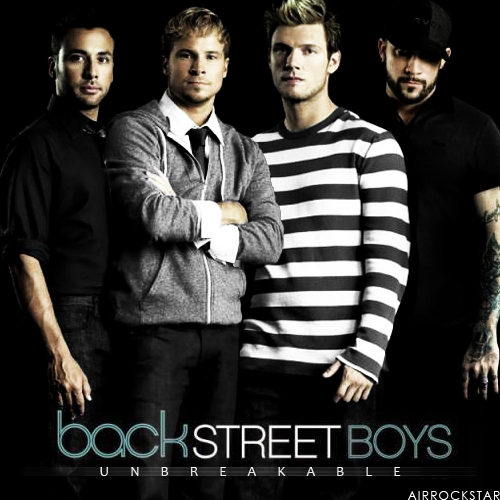
The Backstreet Boys were, in many ways, a contradictory band. Comprised entirely of white middle-class Americans, the group sang a hybrid of new jack balladry, hip-hop, R&B, and dance club pop that originally found its greatest success in Canada and Europe, with their 1996 debut album charting in the Top Ten in nearly every country on the Continent. Ironically, success in their native land did not follow until nearly two years later, when teen pop enjoyed a commercial explosion in America. Along with such artists as *NSYNC and Britney Spears, the Backstreet Boys rose to the forefront of popular music during the turn of the 21st century, with albums like Backstreet's Back, Millennium, and Black & Blue enjoying worldwide success. The core of the Backstreet Boys was comprised of cousins Kevin Richardson and Brian Littrell, both of whom hailed from Lexington, KY. The two began singing in local church choirs and festivals while they were children, performing doo wop and R&B songs in the style of Boyz II Men. Two of the group's other members, Howie Dorough and A.J. McLean, were natives of Orlando, FL, who met each other -- as well as transplanted New Yorker Nick Carter -- through auditions for local commercials, theater, and television. At one audition, the three discovered that they shared an affection for classic soul and could harmonize well together. Inspired, they formed a vocal trio. Shortly thereafter, Richardson moved to Orlando, where he became a tour guide at Disney World and concentrated on music at night. Eventually, he met Dorough, Carter, and McLean through a co-worker, and the four decided to form a group, naming themselves after an Orlando flea market. Littrell was later invited to join, thus turning the group into a quintet. With the help of Louis J. Pearlman (who would later rise to mogul status on the strength of his teen pop acts), the Backstreet Boys secured management from Donna and Johnny Wright, the latter of whom had managed New Kids on the Block during the 1980s. The Wrights put the group out on the road and enlisted several A&R reps to attend the performances, which eventually resulted in a contract with Jive Records in 1994. Jive set the Backstreet Boys up with producers Veit Renn and Tim Allen, who helped shape the group's eponymous album. Released throughout Europe in late 1995, the record enjoyed considerable success, spending several weeks in the Top Ten in most Continental countries where it charted. In the U.K., the Backstreet Boys were named Best Newcomers of 1995 at the Smash Hits Awards thanks to their international hit single "We've Got It Goin' On." After scoring another European hit with "I'll Never Break Your Heart," the group released its album in Canada. Despite the Backstreet Boys' popularity in Europe and Canada, "We've Got It Goin' On" stalled in the lower reaches of the U.S. charts in 1995. Combining their international singles with new tracks (which also formed the centerpiece of that year's European-only album Backstreet's Back), the American version of Backstreet Boys finally jump-started the group's success at home. "Quit Playin' Games (With My Heart)" and "As Long as You Love Me" proved to be popular singles, with the former track climbing to platinum status. The album continued to spin off hits well into 1999, with "Everybody (Backstreet's Back)," "I'll Never Break Your Heart," and "All I Have to Give" all landing on the charts. Both the former and the latter were platinum Top Five hits, and the album eventually sold an astounding 14 million copies in America alone. In the meantime, the group saw its share of turmoil as Littrell underwent surgery in early 1998 to correct a congenital heart defect. Additionally, the Boys became embroiled in lawsuits against Pearlman and the rest of their management over royalties. When the dust settled, Pearlman remained the group's manager -- though the rest of the team was fired -- and the Boys began work on their follow-up album. Millennium was released in the summer of 1999 and debuted at number one, with first-week sales topping one million copies. Buoyed by songs like "I Want It That Way," "Larger Than Life," "Show Me the Meaning of Being Lonely," and "The One", Millennium shattered a number of records, including the highest amount of shipments in one year and the most copies sold during an album's inaugural week. The group released its Christmas Album before the end of the year, by which time Millennium was well on its way to sales of 12 million copies in the U.S. On an international level, the album eventually sold more than 40 million units.Once again, the group struck immediately after its previous album stopped producing hits, issuing Black & Blue in fall 2000. More Top 40 singles followed, including "The Call" and "Shape of My Heart", and Black & Blue followed its predecessor by selling over one million copies during its first week. A popular tour supported the album, but after seven years of nonstop touring and recording, the band agreed it was time for a break. Brian Littrell became a father while Kevin Richardson tried his hand at Broadway and took a starring role in the musical Chicago. Nick Carter released his solo album Now or Never in 2002, Howie Dorough did charity work for the Dorough Lupus Foundation in honor of the sister he had lost to the disease, and A.J. McLean made headlines with his stint in rehab. In 2004, the Backstreet Boys re-formed and began work on a new album. The result, Never Gone, was released in June 2005 to platinum sales, followed by Unbreakable in 2007. The latter was the first album not to feature all five original members, as -----------Kevin Richardson had quietly exited the group in 2006----------. It was also the group's first album not to go platinum, a fact that seemingly cemented the end of the Backstreet Boys' heyday. taken from http://www.sing365.com
Have you ever heard a song entitled “Kiss From A Rose”. What in your mind when you are listening that song. I think its romantic song with unique voice. All of us knew that Seal was the singer of that song.
Seal was born Sealhenry Olumide Samuel in London, England. His parents had moved there from Nigeria and divorced when he was still an infant. Raised first by foster parents and then by his own father, he had what he described to Rob Tannenbaum of Rolling Stones as “a rough childhood”. In an interview with Mark Cooper of Q he called his father “a bitter person who’d missed a lot of opportunities in life. I think he loved me but was just incapable of showing it.” Seal earned a degree in architecture and worked a variety of jobs, from electrical, engineering to posting ads for London prostitutes: the latter occupation resulted in an arrest. After trying to build a music career in London, Seal hooked up with a band called Push, playing funk music or tour in Japan. It was important more for geographical than for musical reasons: “I’d never been to that part of the equator before, “he noted to Tannenbaum. “It was right up my alley. Every day was a new experience”. After a jaunt with Thailand Blues group, he made his way to India and there had what he called “a few spiritual experiences, “The Happiness he felt there, he insisted, bestowed a calm and contentment about his future and allowed him to stop wanting a record deal so fervently. He believes this is why he soon got one. As one of the nineties artist, Seal also became convinced that the half – moon scars under his eyes left by a skin ailment were a kind of omen of stardom. “I got really depressed about (the scars) at first, as you can understand, “he recalled. “Now I really like them” The scars, he ultimately reasoned, would serve as a kind of insignia.
Seal met producer Trevor Horn, who had made a fortune making records for the Art of Noise and Yes, among others, and had his own label, ZTT. In 1990, Seal took his fate into his hands, achieving immediate success that would grab the attention of Horn and much of the pop world. He wrote a song called “Killer” with British Keyboardist Adamski, and its mix of dance and rock, helped by heartfelt singing and lyrics, took it to the top of the U.K chart.